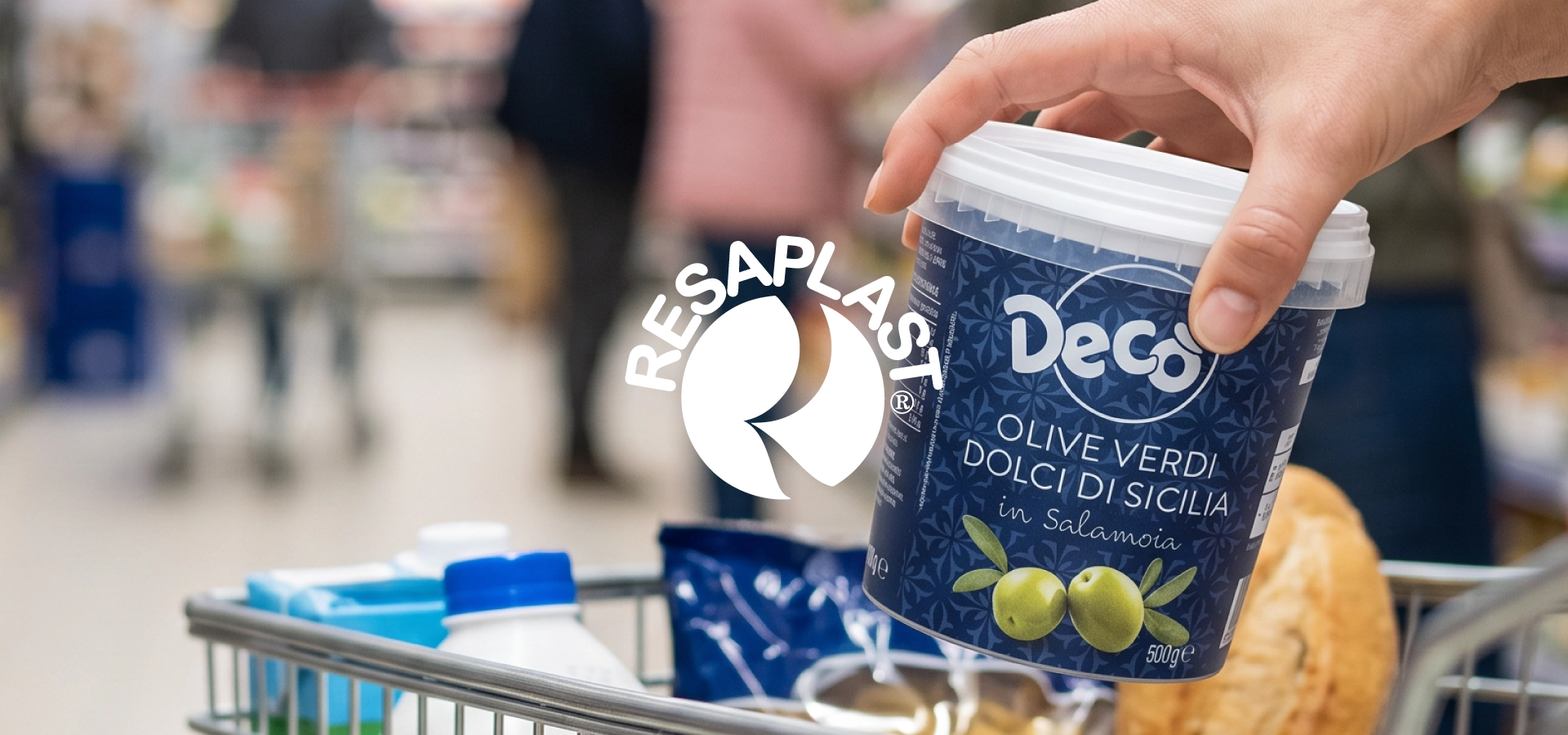
Packaging has become an integral part of both the product and the purchasing experience.
This is confirmed by the 2026 study “Lifestyles in Transition: Italians between Food, Packaging and Sustainability”, conducted by Ipsos Doxa for Comieco. According to the research, 77% of Italians say the sustainability of packaging influences their purchasing decisions, while 75% consider packaging convenience important, with particular attention to features such as resealability and portioning. The choice of packaging material also influences the purchasing decisions of 72% of consumers.
These figures point to a clear shift: packaging is no longer simply what contains and protects a product, but a means through which consumers assess whether that product aligns with their values.
The way we purchase and consume food is changing first and foremost. Traditional home cooking is increasingly complemented by new consumption occasions: ready-to-eat products, take-away, delivery, and on-the-go consumption. Packaging must therefore accommodate different usage scenarios. Resealing a pack, storing it more easily, dispensing the right amount, carrying it, or using it at different times are everyday actions in which packaging plays a tangible role. Shape, format, closure system, and material therefore become essential to the overall functionality of the product.
This is why packaging enters the decision-making process well before the pack is opened.
Among the factors increasingly influencing purchasing decisions, sustainability stands out. Consumers are paying greater attention not only to what a package contains, but also to the type of material used and its recyclability. Clear information on how packaging should be sorted for recycling is also becoming increasingly important. According to the study, 96% of Italians read the information provided on packaging to dispose of it correctly through separate waste collection. The label remains the primary source of information for this purpose.
The relationship between packaging and consumers therefore does not end when the product is consumed, but continues into the post-consumer phase. This inevitably changes the responsibilities of those who design and manufacture packaging: sustainability must be considered throughout the entire packaging life cycle, from raw material selection and packaging design through to end-of-life management.
This is particularly relevant to the food industry, which represents the main end market for Italy’s packaging sector, accounting for between 70% and 80% of the packaging produced and placed on the market.
While sustainability is increasingly influencing purchasing decisions, functionality remains equally important. Behind this aspect lie very practical needs: opening a pack easily, storing it after first use, transporting it, using the required quantity, and preserving the food’s characteristics and quality. For packaging manufacturers, this means translating consumer needs into precise design choices through shapes, formats, secure closure systems, and technical features suited to the intended application.
This approach is reflected in the work of Resaplast, which develops a range of food packaging solutions designed to combine technical performance, food safety, functionality, and versatility. Its offering includes containers with lids and guarantee seal, jars and buckets with lids and guarantee seal, and solutions designed for heat sealing, available in a variety of formats, sizes, and capacities.
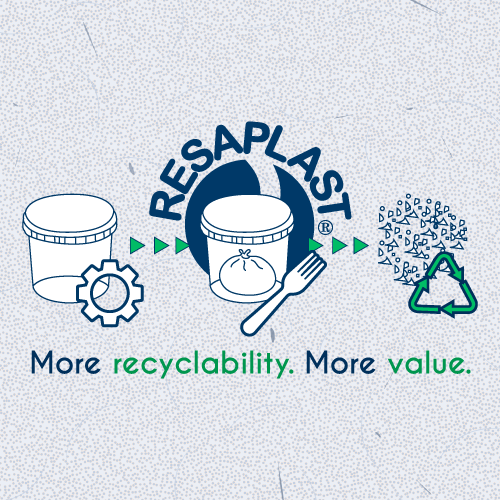
Material selection is also a key component of Resaplast’s offering. The range consists of mono-material solutions made from 100% recyclable virgin polypropylene, developed with a focus on end-of-life recyclability. Alongside this, Resaplast continuously works to optimize packaging weight and volume without compromising the technical and functional properties required for each application.
The result is a diverse range designed not simply to offer variety, but to meet increasingly specific and differentiated needs. It is no longer simply a matter of producing an efficient container, but of designing a solution capable of meeting the needs of every player across the value chain: the manufacturer who needs to pack the product, the distributor who needs to handle it, and the consumer who will ultimately use it and dispose of the packaging correctly.
This is where Resaplast continues to develop its offering: food packaging solutions designed to bring together production requirements and evolving market expectations. Because today, packaging is no longer simply what protects a food product: it is part of the product, the experience, and the choice that ultimately puts it in the consumer’s shopping cart.