The food packaging industry is undergoing a transformation that is reshaping its role, responsibilities and impact across the entire value chain. Packaging is no longer simply a product accessory; it has become a strategic driver within modern manufacturing and distribution systems.
Evolving market demands and increasingly stringent European regulations require packaging solutions capable of ensuring food safety, product protection throughout the supply chain, integration into circular economy models and economic sustainability at scale.
Sustainability beyond materials
Sustainability in packaging cannot be reduced to material selection alone. What truly makes a difference is the product’s entire lifecycle: design, manufacturing, logistics, use, recycling and reintegration into production cycles.
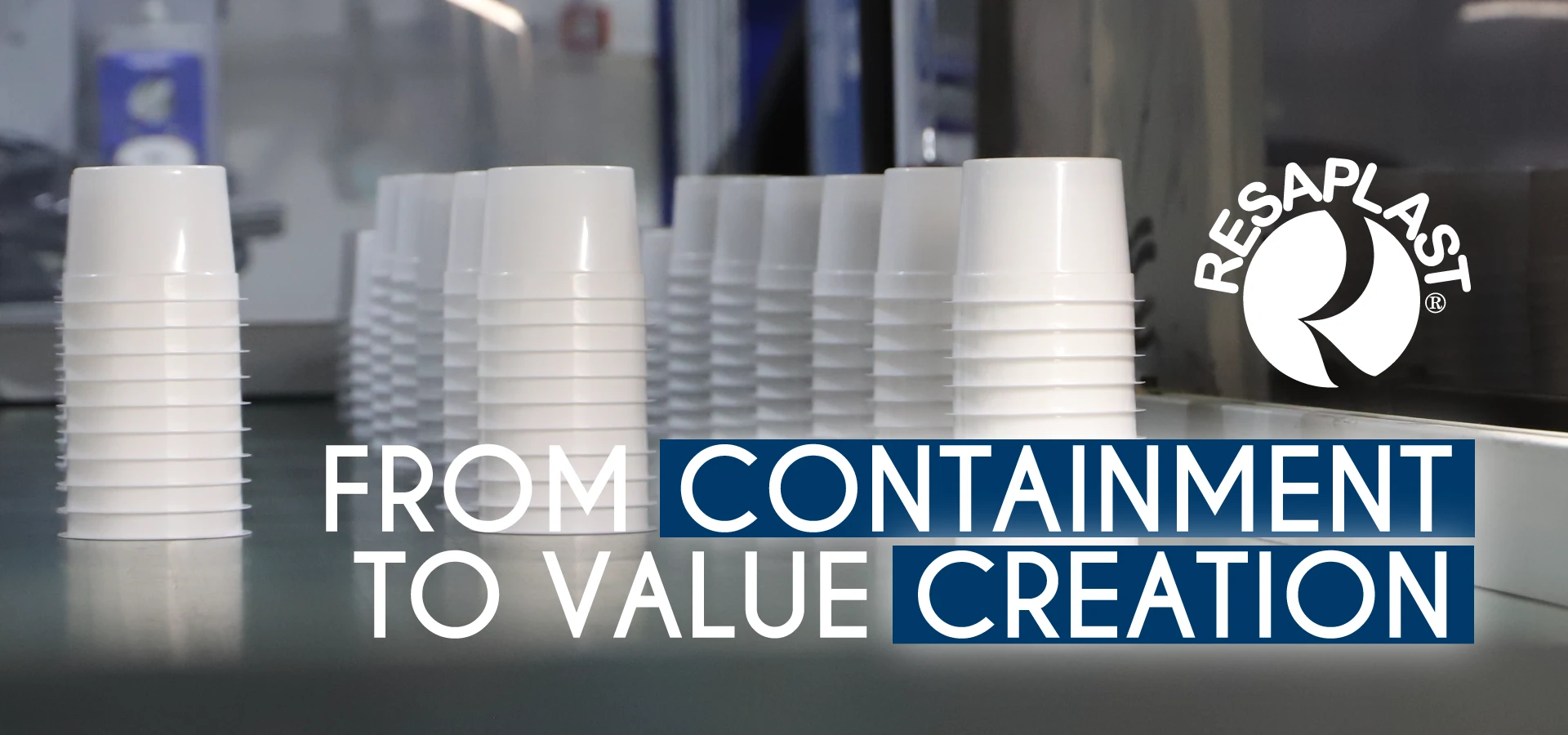
Lightweight mono-material solutions designed to facilitate collection, sorting and recycling can, in many cases, prove more sustainable than alternatives perceived as more “natural” but difficult to manage at the end of their life cycle. Within this framework, polypropylene continues to be one of the most effective materials for food packaging applications. Its full recyclability, chemical inertness, food-contact safety, mechanical performance and processing versatility make it a reliable solution.
However, the future of sustainable packaging extends beyond recyclable materials. Today, innovation also means investing in more efficient manufacturing processes.
Industrial innovation and process excellence
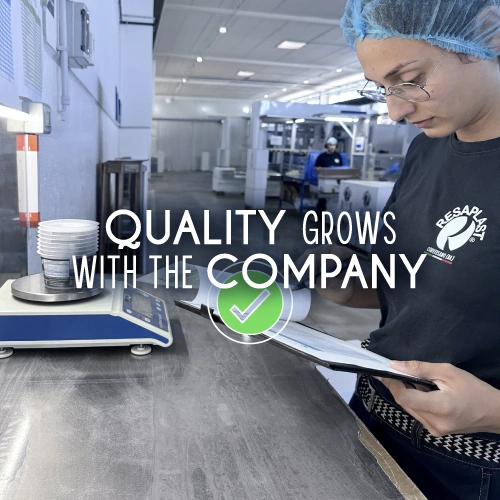
The industry's transformation is equally driven by advancements in production technologies. Digitalisation, automation and next-generation manufacturing systems are redefining industrial packaging production, enabling high levels of quality control, traceability and process repeatability, even in large-scale manufacturing.
In food packaging, where even minor variations can affect final product performance, production accuracy and quality consistency have become critical competitive advantages. At the same time, process optimisation helps reduce waste, lower energy consumption and minimise overall environmental impact.
Resaplast's ongoing modernisation journey reflects this commitment through investments in automated injection moulding systems, integrated optical inspection technologies and manufacturing processes designed to meet the highest safety and quality standards.
The packaging supply chain as an industrial ecosystem
Another key aspect of this evolution is the growing role of packaging as a connector between businesses, know-how and local industrial networks. The supply chain is increasingly operating as an integrated industrial ecosystem in which material producers, converters, food manufacturers, logistics providers and automation specialists contribute collectively to overall competitiveness.
In this context, collaboration among highly specialised industrial players becomes a strategic growth driver that not only creates economic value but also accelerates innovation, strengthens supply chain resilience and supports employment.
True innovation is achieved when companies with complementary expertise align around shared objectives, combining know-how, resources and manufacturing capabilities. The integration of Resaplast with PlasticLegno, part of the Sunino Group, reflects precisely this approach. It is an industrial project built on a common vision of growth, sustainability and competitiveness.
This represents the most tangible expression of industrial cohesion: a strategic choice whose value can be measured through the benefits it generates for businesses, communities and local economies.
Future packaging solutions will need to balance benefits and trade-offs. Achieving this balance will depend on advanced technologies, responsible manufacturing practices and continuous innovation. This challenge requires ongoing investment, supply chains capable of evolving together and industrial visions that extend beyond the packaging itself.
Today, the value of packaging is no longer measured solely by its primary function, but by the positive impact it can generate throughout the value chain.