Resaplast is entering a new phase of industrial development, driven by an investment plan that strengthens automation, traceability, and production capacity, with the goal of making innovation a structural element of its manufacturing model. The modernization project involves the entire internal supply chain, from plants to processes.
Raw materials: from manual handling to automation
One of the most significant interventions concerns raw material management. The operations of loading, opening, and handling of polymer bags are now entrusted to an automated system that conveys the material to a centralized plant supplying the storage silos.
The process takes place in a controlled, aseptic environment that complies with the hygiene and safety requirements for food packaging. The automation of this phase not only increases operational efficiency but also reduces the risk of contamination while improving ergonomic conditions for operators.
Digital traceability across the entire supply chain
Driven by this evolution, Resaplast is implementing an advanced system of material traceability. The area dedicated to raw material management will be fully automated, and each PP batch will be identified simply by scanning the label. From that moment on, the system will automatically manage bag opening, filling of the assigned silo, transfer of all related information, and tracking of the internal batch assigned to the material. The batch will then proceed through the dryers to the rack that feeds each individual press.
The result is continuous, fully traceable material flow, enabled by management software integrated with the company’s ERP system. This allows real-time access to updated data on consumption, inventory levels, and usage by each production line, improving overall process efficiency.
More presses, more technology, higher quality
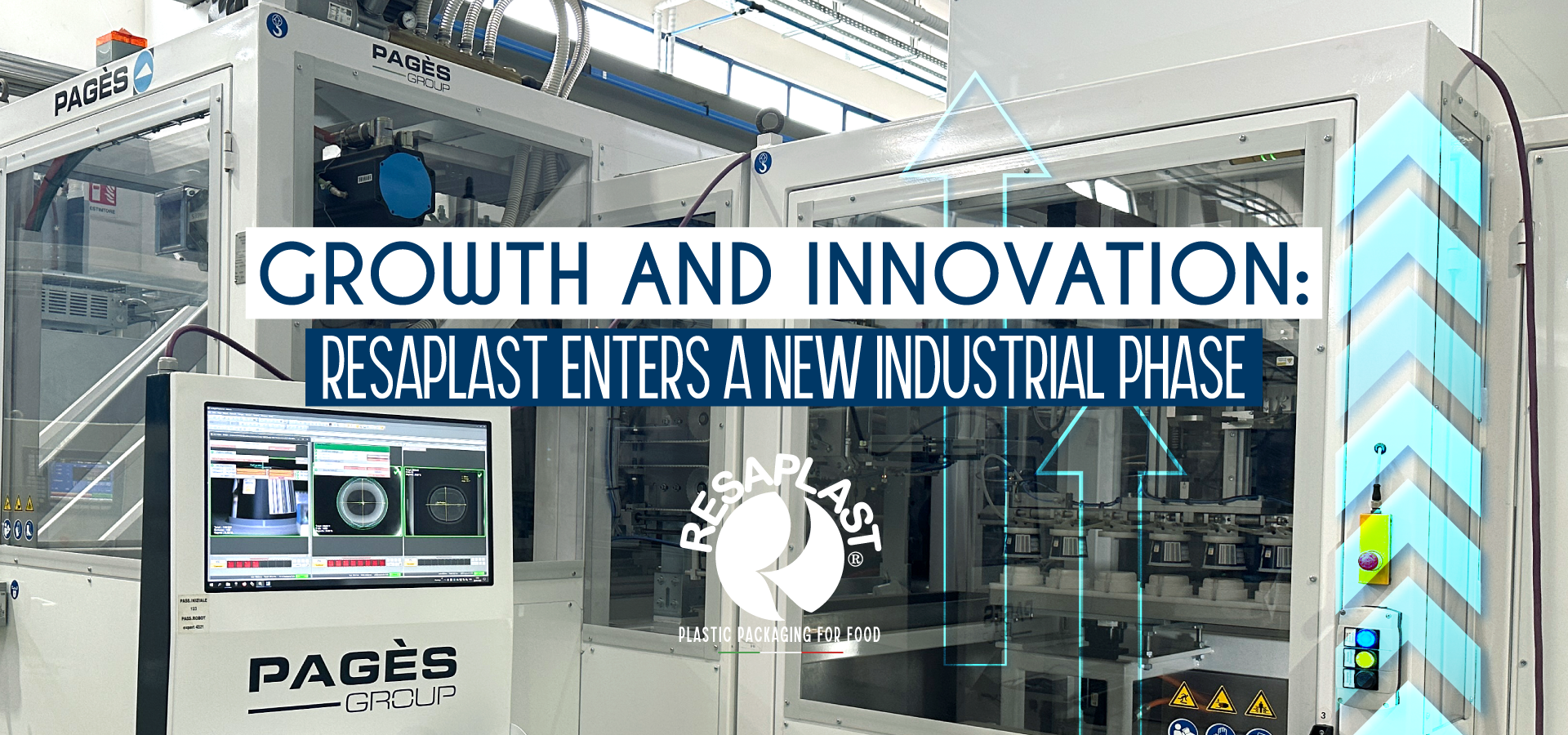
Modernization also extends to the production department. Over the past two years, Resaplast has installed eight new state-of-the-art injection molding machines, increasing production capacity by 80%.
The new lines are highly digitized and designed to optimize energy consumption, reduce environmental impact, and minimize manual intervention. Handling and packaging stages are now automated and integrated directly into the machines, boosting productivity, process repeatability, and reducing the risk of errors.
Further innovation comes with the optical inspection systems installed in the presses: each piece is inspected in real time during production, with automatic identification and rejection of any non-conforming items. Quality control thus becomes an integral part of the production cycle, delivering tangible benefits in terms of precision, waste reduction, and final product reliability.
Enhancement of the photovoltaic system
Resaplast has doubled the production capacity of its photovoltaic system, reaching approximately 1 MW, thereby strengthening energy autonomy and covering a significant portion of its production needs through renewable sources. The integration of high-efficiency production plants with self-generated energy thus reduces the overall carbon footprint and helps promote a more sustainable and resilient industrial model.
Skills and human capital
Technological evolution has been accompanied by an investment in human capital. The company now employs around 50 people and has strengthened its workforce with new hires and supervisory roles specializing in process quality control—from raw materials to finished products and storage.
Over the years, Resaplast has recorded an increase in female representation within its workforce, rising from less than 10% to a share approaching gender parity. This demonstrates how automation and digitalization have made the production environment more accessible and inclusive. A modern vision of industrial work that confirms how, for Resaplast, innovation is always closely linked to the development and enhancement of skills.
New product lines for high-value markets
Alongside its industrial investments, Resaplast has expanded its product range with new packaging solutions aimed at premium market segments, such as niche ice cream and high-end product lines.
Through this development plan, Resaplast consolidates a long-term industrial model where innovation is not a one-off initiative but a continuous strategic lever to ensure the highest standards of quality, food safety, sustainability, and efficiency.
The company continues to strengthen its role as a reliable partner for the food industry, demonstrating that when innovation is structural, it becomes the best ally of growth.