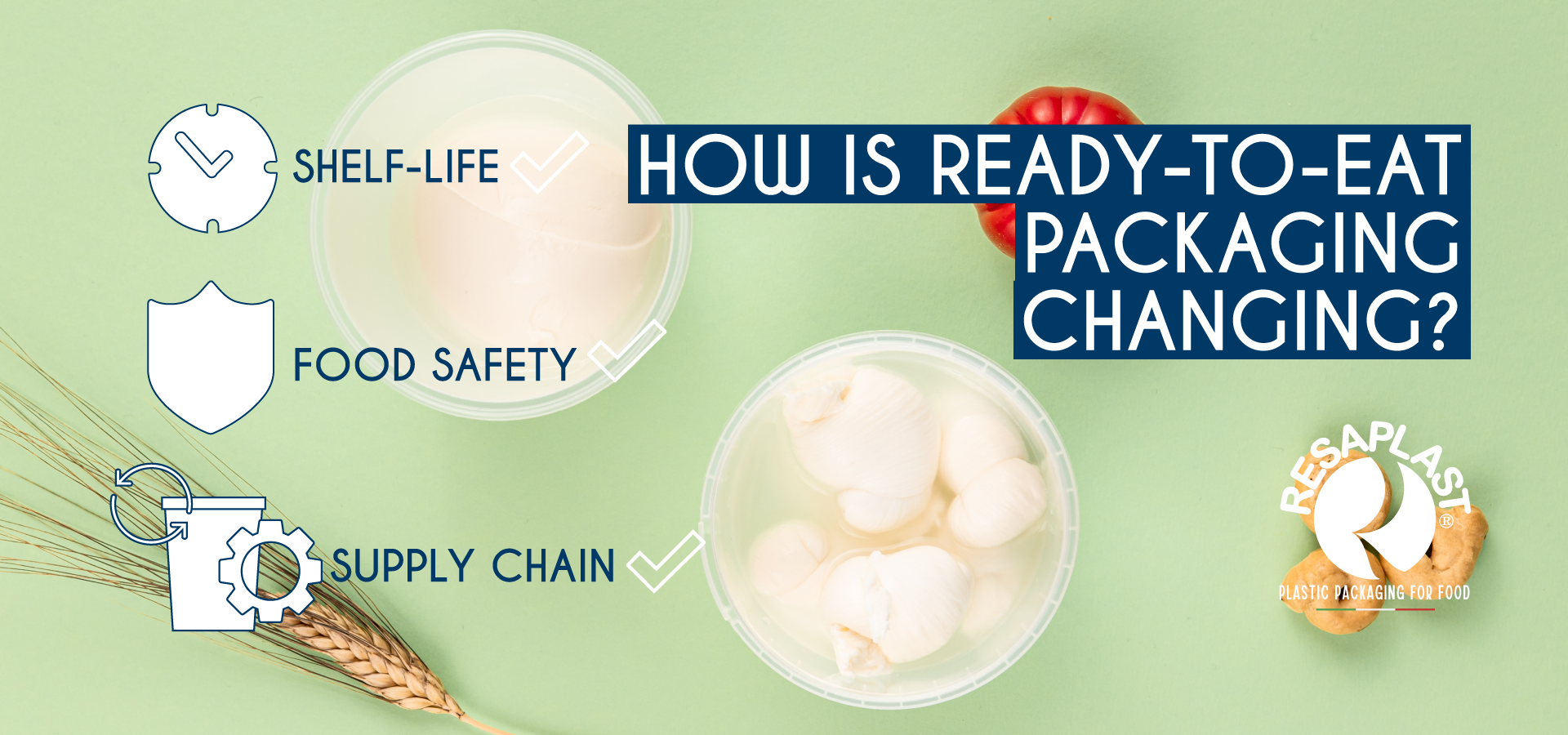
The revolution in eating habits is transforming the market: more and more consumers are choosing ready-to-eat foods, driven by hectic lifestyles and the need for convenient, “on-the-go” solutions. This trend has set new priorities for the food packaging sector: safety, extended shelf life, and supply chain optimization have become essential requirements.
“Ready-to-eat” refers to foods that can be consumed without preparation, from ready meals to refrigerated or frozen products, from snacks to preserves. In recent years, this segment has experienced steady growth, fueled by needs such as convenience, quick consumption, and attention to quality: modern consumers do not compromise on freshness and safety, even when they have less time to cook.
Packaging plays a fundamental role in supporting this evolution. Ready-to-eat products are highly perishable due to the absence of chemical preservatives, which leads to specific requirements:
- Extended shelf life: ready-to-eat foods are distributed through complex supply chains that may include long transport, warehouse storage, and varying periods on supermarket shelves. Extended shelf life allows products to travel greater distances and remain on shelves longer, supporting large-scale distribution. This ensures that the product stays intact and appealing for a sufficient period, reducing losses along the supply chain.
- Logistical adaptability: packaging must be robust, compatible with refrigeration systems, and able to withstand rapid and frequent transfers, impacts, and temperature variations without compromising product integrity along complex and dynamic supply chains, meeting modern consumers’ expectations for freshness and immediate availability.
- Protective barrier: only packaging made from materials suitable for food contact can prevent microbial contamination, bacterial and mold growth, and undesirable reactions such as oxidation, rancidity, or changes in color and texture.
For Resaplast, these requirements are drivers of innovation and differentiation. The company produces polypropylene (PP) food containers designed to meet the needs of various ready-to-eat segments, including ice cream, single-serve dairy products, taralli, olives, and other preserves.
The strengths of Resaplast packaging are threefold:
- Optimized shelf life: thanks to PP, which ensures extended shelf life, and efficient and high-performing closure systems—with lids (also hermetic) and guarantee seals or heat-sealable options—Resaplast packaging provides high barrier protection, thermal insulation, resistance to temperature fluctuations, and chemical inertness, preserving the original quality of vulnerable ready-to-eat products.
- High logistical performance: despite being lightweight, Resaplast packaging is resistant to impacts and mechanical pressures, stable, and ideal for complex supply chains and intensive distribution schedules, minimizing the risk of damage, breakage, or release of unwanted substances.
- Certified food safety: the PP used is MOCA-certified and among the safest materials for food contact, providing protection and ensuring no alteration of the organoleptic characteristics of ready-to-eat products, for which hygiene and safety are essential requirements.
At Resaplast, we embrace the challenges of the ready-to-eat sector by offering high-performance, safe, and functional containers: tools that allow products to reach consumers in optimal condition, balancing quality and operational efficiency.
Because when shelf life becomes crucial and supply chains grow complex, choosing the right packaging becomes the key to product success.